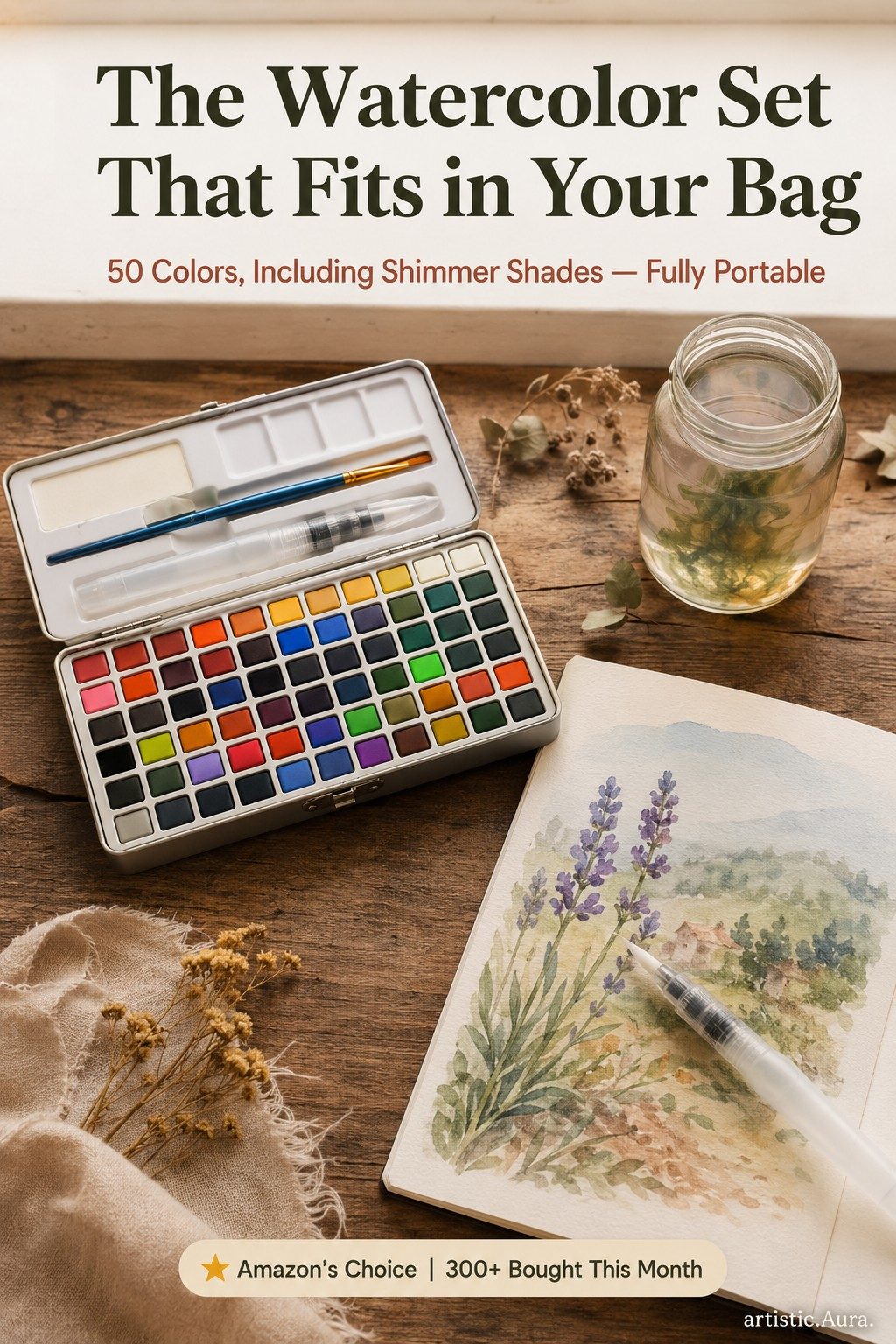
Watercolor has a reputation for being an intimidating medium to start, but the actual supply list is short — the challenge is technique, not equipment.
What You Actually Need to Start
- A set of watercolor paints (pan or tube format — see below)
- A couple of brushes in different sizes (a medium round brush covers most early needs)
- Watercolor paper (not regular sketchbook paper — see our paper guide for why this matters)
- A water container and a way to blot excess water (a cloth or paper towel)
That's genuinely the complete starting list — palettes, specialty brushes, and masking fluid are all things worth adding later, not day-one requirements.
Pan vs. Tube Format
Pan (solid cake) watercolors are more portable and lower-maintenance — you simply wet the brush and pick up pigment directly, with no mixing palette required for basic use. Tube watercolors require squeezing paint onto a palette and offer more control over paint consistency for wash work, but involve more setup and cleanup. For beginners, pan sets are generally the easier, less fussy starting point.
Color Count: Fewer Colors Can Actually Teach You More
It's tempting to buy the largest color-count set available, but starting with a smaller, curated palette and learning to mix your own colors builds a real, transferable skill — understanding how colors combine — that a 50-color set doesn't require you to develop. That said, a larger pre-mixed set (like a 50-color set) removes that learning curve entirely, which has genuine value if you'd rather start painting immediately than study color theory first. Neither approach is wrong; it depends on what you want to learn first.
Why Watercolor Paper Specifically Matters
Regular sketchbook paper buckles, pills (the surface breaks down into small balls under a wet brush), and doesn't hold pigment the way watercolor paper does. Watercolor paper is thicker (typically 200gsm+) and often has cotton content specifically to handle repeated wetting without deteriorating — this isn't a nice-to-have, it's close to a requirement for the medium to work as intended.
Lightfastness: Worth Checking If You'll Display Your Work
Lightfastness ratings indicate how much a pigment fades under light exposure over time. This matters most if finished pieces will be framed and displayed rather than kept in a sketchbook — worth checking if that's your goal, less critical if your watercolor work stays in a private sketchbook.
Frequently Asked Questions
Do I need special brushes for watercolor, or can I use any paintbrush?
Watercolor-specific brushes (natural or synthetic) are designed to hold and release water differently than brushes made for acrylic or oil paint. A dedicated watercolor round brush in a medium size is a reasonable starting investment rather than repurposing a generic craft brush.
Is a bigger color-count set always better value?
Not necessarily — it depends on whether you want to learn color mixing (better served by a smaller set) or start painting immediately with a wide range ready to use (better served by a larger set). Neither is objectively the better choice.