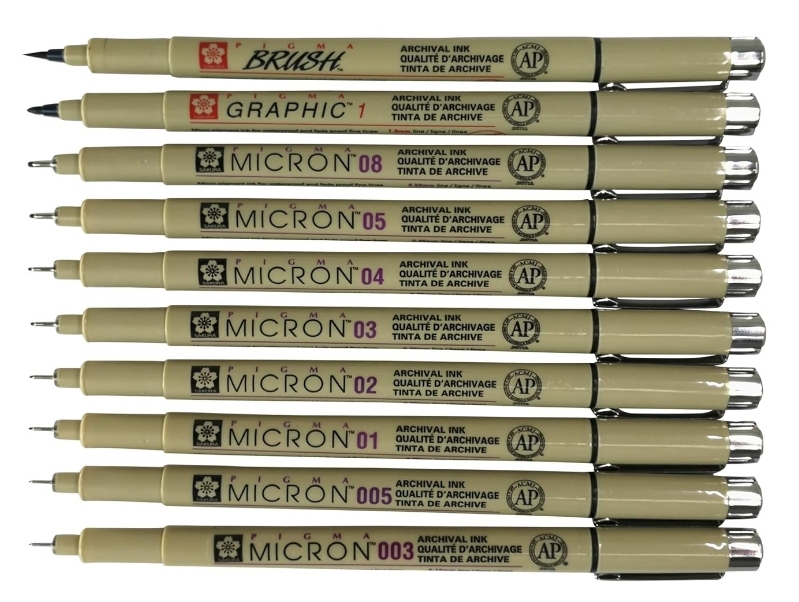
Brush pens occupy a different niche than fineliners — the flexible tip is the entire point, and choosing one means understanding what that flexibility actually gives you.
How Brush Pens Differ From Fineliners
A fineliner has a rigid tip that produces a consistent line width regardless of pressure — reliable for technical linework, but with no natural line-weight variation. A brush pen's flexible tip responds to pressure, producing thin lines with light pressure and thick lines with more pressure, similar to a traditional ink brush. This is the entire value proposition of a brush pen: expressive, variable line weight from a single tool.
For Lettering: Tip Flexibility Is Everything
Brush lettering relies entirely on the thin-up, thick-down stroke technique that comes from a flexible tip. A stiffer brush pen tip is more predictable and easier to control for beginners learning the technique; a softer, more flexible tip gives more dramatic line-weight contrast but takes more practice to control consistently. Beginners to brush lettering generally do better starting with a firmer tip and moving to softer tips as their control improves.
For Illustration: Ink Quality Matters As Much As the Tip
For illustration work, ink properties matter alongside tip feel — the same "pigment vs. dye" distinction covered in our fineliner coverage applies here: pigment-based inks resist fading and water exposure better than dye-based inks, which is worth checking if your finished pieces will be scanned, displayed, or kept long-term.
Tip Material: Bristle vs. Felt vs. Rubber
Real or synthetic bristle tips give the most natural, brush-like variation and are generally preferred by illustrators wanting maximum expressiveness, but require more practice to control and are more delicate. Felt and rubber tips are firmer and more predictable — often better for beginners or for lettering specifically, where control matters more than maximum expressiveness.
A Reasonable Starting Point
If you're new to brush pens, a firmer felt-tip pen is generally the easier starting point for building fundamental control before moving to softer, more expressive bristle tips.
Frequently Asked Questions
Can I use a brush pen for fine detail work like a fineliner?
Not reliably — the flexible tip that gives brush pens their expressive line weight also makes it harder to produce the consistent, fine, controlled lines a fineliner is built for. They're complementary tools for different purposes, not substitutes for each other.
Do brush pens dry out faster than fineliners?
It depends on the specific pen's ink reservoir and cap design more than the tip type — check reviews or product specifications for a given pen rather than assuming brush pens generally dry out faster.